

Overview
Automotive OEMs are building connected products that continuously generate, exchange, and act on data throughout the vehicle lifecycle. Vehicle and ECU signals, telematics, diagnostics, software state, enterprise systems, APIs, devices, and event streams all contribute to an increasingly continuous flow of operational data.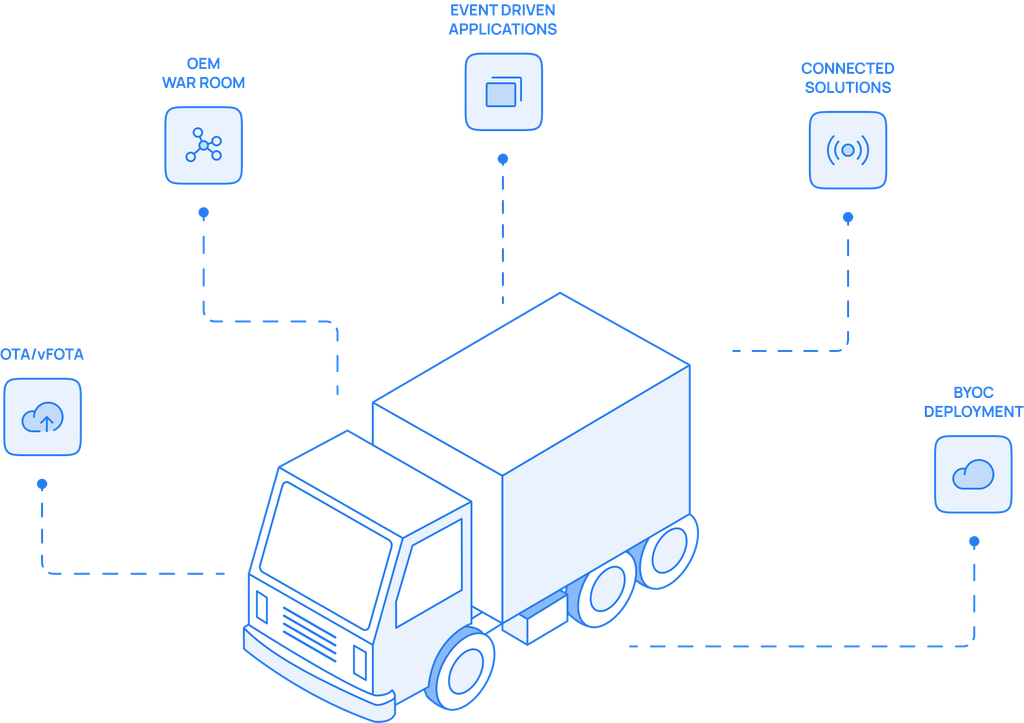
Why Real-Time Matters in Automotive
Connected automotive solutions depend on continuous streams of vehicle, driver, and operational events. The value of these events depends not only on collecting them, but on processing them quickly enough to trigger the required business or operational action. A vehicle event may need to pass through event processing, business logic, enterprise integrations, and application orchestration before an action can occur. When these capabilities are implemented as independent systems, each stage can introduce additional latency and operational complexity. Consider a diagnostic trouble code (DTC):Condense for Automotive OEMs
Condense combines an enterprise-grade real-time streaming foundation with an automotive ecosystem. The platform can be understood through four stages:Connect
Ingest real-time automotive data from:- Vehicles
- ECUs
- Telematics devices
- Enterprise systems
- APIs
- IoT devices
- Existing event streams
Process
Transform and enrich vehicle events using built-in stream processing. Processing can include:- Filtering
- Transformation
- Enrichment
- Normalization
- Routing
- Business rules
- Domain-specific transformations
- Event correlation
Build
Build event-driven applications and microservices on top of the streaming foundation. Developers can write microservices in their preferred language. The Condense Developer Agent can also generate application logic from developer requirements.Deploy & Scale
Run applications and pipelines in the customer’s cloud environment with managed deployment and automatic scaling. Condense also provides platform agents such as the Kubernetes Agent and Pipeline Agent for operational workflows and automation.Automotive Data Architecture
A typical automotive workload can combine vehicle data with enterprise and application data:Unified Platform for the Automotive Lifecycle
Condense can support real-time automotive services across the manufacturing and connected-vehicle lifecycle.Connected Vehicle Operations Center
Provide real-time visibility into:- Fleet health
- Service status
- Vehicle utilization
- Alerts
- Operational KPIs
Remote Diagnostics and Predictive Maintenance
Process vehicle health and diagnostic events to support proactive service actions. Typical signals include:- DTCs
- Warning lamps
- Regeneration events
- Inducement conditions
- Vehicle health indicators
- Engine health
- Battery performance
OTA and Software Lifecycle Management
Software-defined vehicles require software and firmware to be managed throughout the vehicle lifecycle. Condense provides the event and application foundation for:- OTA campaign management
- vFOTA workflows
- Software and firmware updates
- Campaign tracking
- Rollout monitoring
- Software state tracking
- Software compliance
Vehicle Health and Performance Analytics
Process continuous vehicle data to understand vehicle condition, performance, and utilization. Typical signals include:- Fuel consumption
- AdBlue usage
- Battery performance
- Engine health
- Critical vehicle parameters
- Utilization
Engineering Intelligence and R&D Analytics
Field data provides engineering teams with continuous visibility into how vehicles and components behave in real operating conditions. Condense can provide event streams for:- Vehicle behavior analysis
- Component performance
- Software effectiveness
- Field diagnostics
- Product performance
- Engineering analysis
Connected Vehicle Provisioning and Compliance
Connected vehicle programs require provisioning and lifecycle management from factory through field operation. Condense can support workflows involving:- VIN-IMEI mapping
- Device onboarding
- SIM lifecycle
- Vehicle activation
- Certification workflows
- Dealer workflows
- Compliance processes
Software-Defined Vehicles
A Software-Defined Vehicle (SDV) continuously uses software to enhance vehicle functionality, performance, and customer experiences through remote updates, digital services, and connected applications. SDV programs require a real-time foundation that can connect vehicle events, software state, update campaigns, operational systems, and customer-facing applications. Condense provides:- Real-time event streaming
- Vehicle and device connectivity
- Event processing
- Application development
- OTA and software lifecycle workflows
- Application deployment
- Observability and operations
Aftermarket Services
Connected vehicle data can extend beyond vehicle operations into digital aftermarket services. Real-time data can support:- Proactive maintenance
- Remote diagnostics
- Service notifications
- OTA updates
- Warranty insights
- Digital aftersales experiences
- Vehicle uptime workflows
Automotive Ecosystem
Automotive workloads require capabilities that are specific to the industry. Vehicle data can involve different devices, protocols, identifiers, diagnostic formats, enterprise workflows, and certification requirements. Condense extends its core platform with automotive-specific capabilities.Automotive-Ready Capabilities
The automotive ecosystem can provide:- Automotive protocol support
- Device connectors
- Vehicle data parsers
- Telematics integrations
- VIN-IMEI mapping
- OTA and vFOTA building blocks
- Device management
- SIM operations
- Certification workflows
- Driver analytics
- OEM onboarding workflows
- Connected-vehicle applications
Pre-Built Applications and Accelerators
Condense can provide application building blocks for common automotive requirements. Examples include:- OTA and vFOTA
- Device management
- SIM operations
- OEM onboarding
- VIN-IMEI mapping
- Certification workflows
- Driver analytics
- Connected vehicle operations
- Analytics workflows
Building Automotive Applications
Automotive applications frequently combine real-time events with business logic and integrations. Condense allows teams to build these applications on the same streaming foundation. Applications can be developed using:- Custom event-driven microservices
- Custom transforms
- Pre-built transformations
- Automotive-specific capabilities
- APIs
- Enterprise integrations
Deployment and Scaling
Automotive workloads often need to run continuously and handle changes in event volume as vehicle populations, applications, and services grow. Condense supports:- Deployment in the customer’s cloud
- Automatic scaling
- Application management
- Pipeline management
- Kubernetes-based operations
- Runtime management
- Platform observability
BYOC for Automotive OEMs
Condense follows a fully managed Bring Your Own Cloud (BYOC) model. The platform can run within the customer’s:- AWS environment
- Azure environment
- Google Cloud environment
- OCI environment
- On-premises environment
- Data ownership
- Governance
- Compliance
- Data residency
- Existing cloud investments
- Infrastructure control
Security, Governance, and Operations
Automotive workloads can be mission-critical and require operational controls beyond basic event processing. Condense provides capabilities for:- Enterprise-grade security
- Access control
- Governance
- Observability
- Platform operations
- Application operations
- Runtime monitoring
- Deployment management
- 99.95% uptime SLA
Without Condense vs. The Condense Approach
Building a connected vehicle platform using separate technologies can require OEM teams to assemble and maintain multiple layers.Why Automotive OEMs Choose Condense
Unified Platform
Condense combines streaming infrastructure, data integration, processing, application development, deployment, and operations in a common environment.Automotive Ecosystem
Automotive connectors, protocols, integrations, and domain capabilities reduce the amount of automotive-specific infrastructure OEM teams need to build and maintain.Production-Ready Building Blocks
Pre-built capabilities for OTA/vFOTA, device management, VIN-IMEI mapping, certification workflows, OEM onboarding, driver analytics, and connected vehicle operations accelerate application development.Data Control Through BYOC
The platform runs within the customer’s cloud or supported on-premises infrastructure, allowing OEMs to retain control over data, governance, and compliance.Enterprise Reliability
Condense provides enterprise-grade security, observability, governance, and a 99.95% uptime SLA for production workloads.Integrated Development and Operations
Developers can build event-driven applications while platform teams manage deployment, scaling, runtime, and operations within the same platform.Production Reference
Condense has been deployed for large-scale automotive workloads. One production deployment with Volvo Eicher Commercial Vehicles (VECV) processes data from more than 250,000 connected vehicles and handles more than 150 TB of data per month. The deployment operates with dynamic throughput of 120–500 Mbps, pipeline latency below 500 ms, and a 99.95% availability SLA. Condense is deployed within the customer’s cloud environment using the BYOC model. The VECV deployment demonstrates the use of the Condense streaming foundation for large-scale connected-vehicle workloads and provides a production reference for automotive OEM deployments.Connected Automotive Architecture
A complete automotive implementation can bring together the platform, ecosystem, applications, and enterprise systems:Automotive OEM Use Case Coverage
Frequently Asked Questions
What is a connected vehicle platform?
A connected vehicle platform enables Automotive OEMs to collect, process, and act on real-time vehicle data while supporting services such as OTA updates, diagnostics, fleet operations, analytics, and customer-facing applications.Why is real-time data important for Automotive OEMs?
Real-time data enables OEMs to monitor vehicle health, detect issues proactively, optimize operations, automate service workflows, and deliver connected vehicle experiences without unnecessary delays.What challenges do Automotive OEMs face when building connected vehicle platforms?
OEMs typically need to integrate vehicle protocols, devices, enterprise systems, applications, diagnostics, software lifecycle systems, analytics, and operational workflows while also managing scalability, security, and ongoing maintenance.How do Automotive OEMs process vehicle telemetry at scale?
Vehicle telemetry can be ingested through connected devices and enterprise systems, streamed through Kafka, processed in real time, and routed to applications, analytics, and downstream systems. Condense combines these capabilities within a common platform.What is a Software-Defined Vehicle?
A Software-Defined Vehicle uses software to continuously enhance vehicle functionality, performance, and customer experiences through remote updates, digital services, and connected applications.How do OTA and vFOTA benefit Automotive OEMs?
OTA and vFOTA allow OEMs to remotely deploy software and firmware updates, manage campaigns, track rollout progress, reduce workshop visits, and support Software-Defined Vehicle programs.What are the key components of a connected vehicle ecosystem?
A connected vehicle ecosystem typically includes vehicle connectivity, telematics, real-time streaming, diagnostics, OTA management, analytics, enterprise integrations, applications, and operational workflows. Condense provides a common platform across these capabilities and extends it through automotive-specific ecosystem components.Why do Automotive OEMs use BYOC?
BYOC allows OEMs to retain control of their data and infrastructure, meet data residency and compliance requirements, and use existing cloud investments while Condense manages the platform.How does Condense reduce connected vehicle platform complexity?
Condense brings data ingestion, streaming, processing, application development, deployment, scaling, observability, governance, and operations into one platform. Automotive-specific connectors, integrations, and building blocks further reduce the need to build and maintain these capabilities independently.How can connected vehicle platforms improve aftermarket services?
Real-time vehicle data can support proactive maintenance, remote diagnostics, service notifications, OTA updates, warranty insights, and digital aftersales services.How can Automotive OEMs improve vehicle uptime?
OEMs can continuously monitor vehicle health, diagnostics, fault codes, software state, and operating parameters. These events can be processed into alerts, service workflows, and predictive operational actions.What should an Automotive OEM look for in a real-time platform?
Key considerations include:- Real-time data ingestion
- Streaming scalability
- Automotive protocol and device support
- Diagnostics and vehicle health processing
- OTA and software lifecycle capabilities
- Application development
- Deployment flexibility
- Security and governance
- Observability
- Enterprise integrations
- Domain ecosystem
- Production reliability